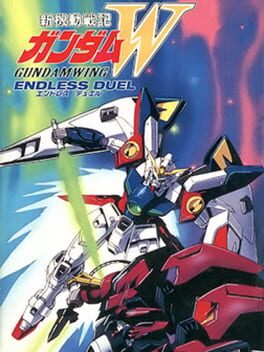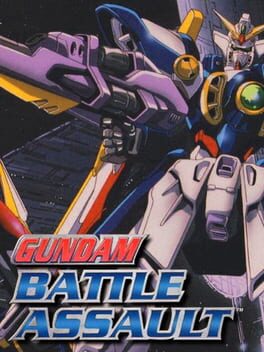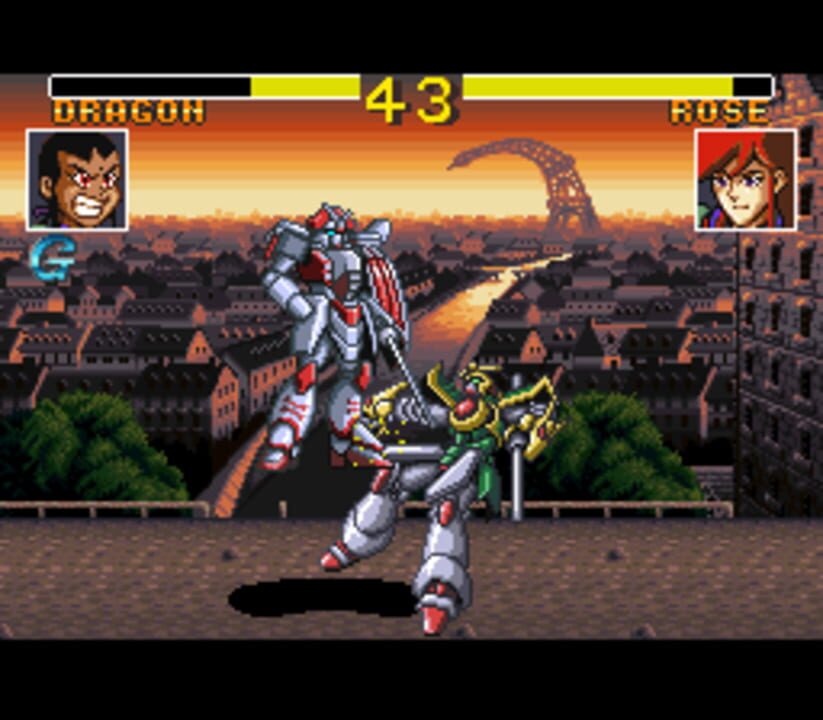
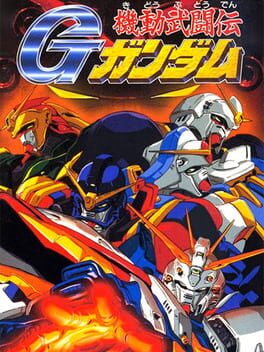
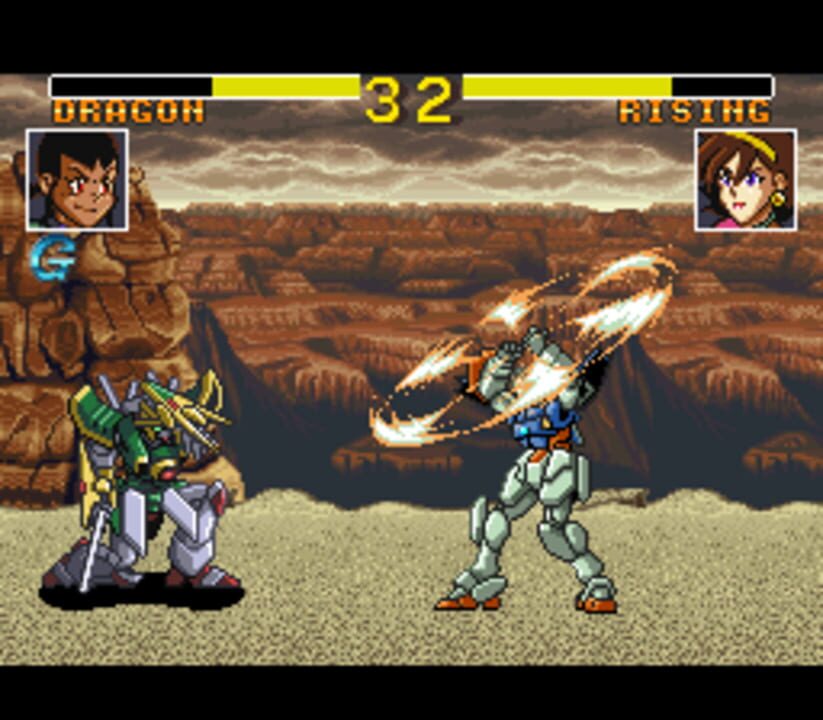
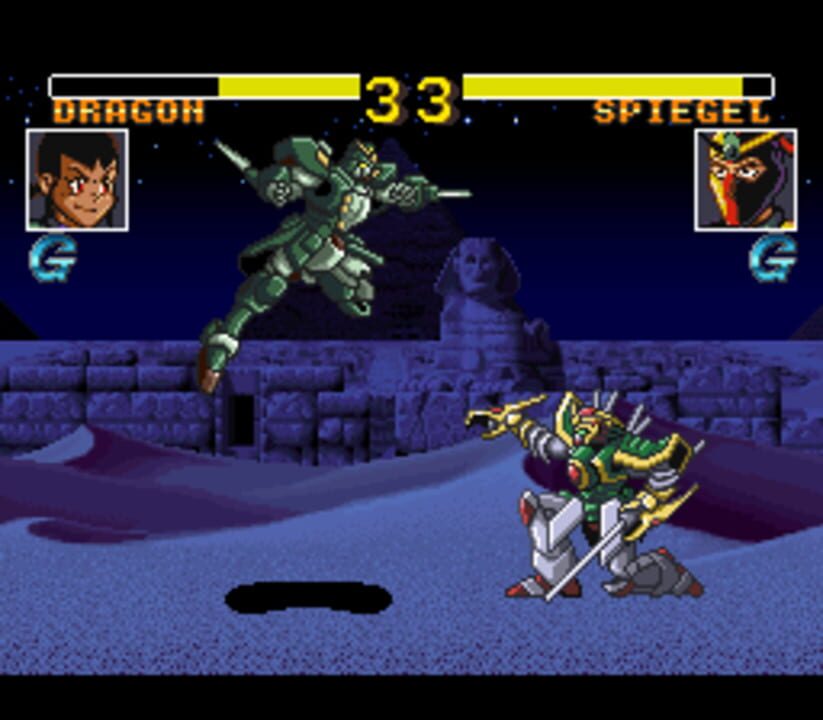
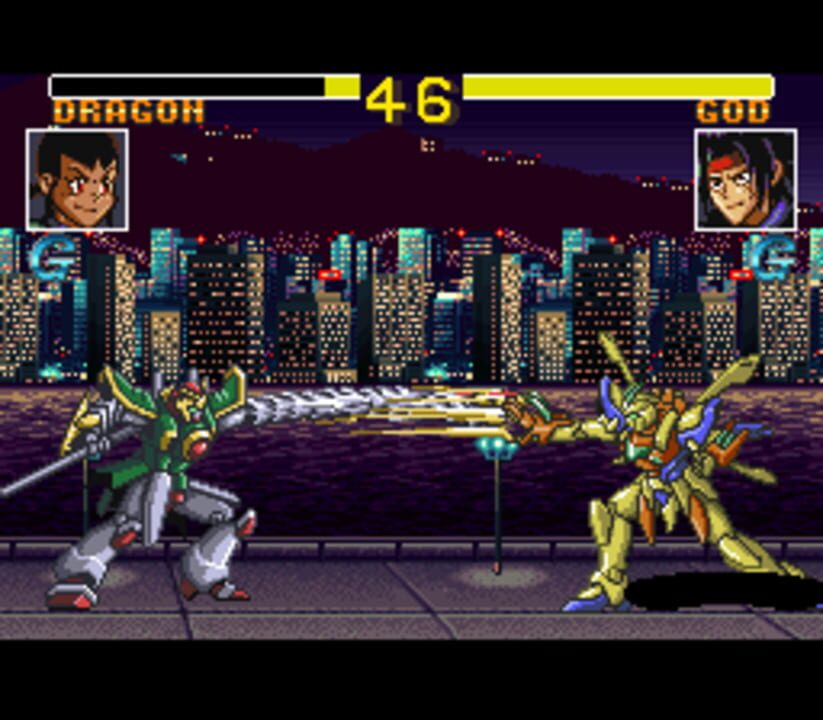
Kidou Butouden G Gundam is based on the 1994 anime TV series of the same name. The first Gundam production not set in the continuity established in the 1979 original series of the franchise, G Gundam presents a world in which global conflicts are settled in a yearly tournament fought between Gundam mecha, each representing its nation's qualities (and stereotypes). Naturally, this premise was adapted into a one-on-one fighting game. The game includes 10 different Gundams (one of which can only be selected by players via a secret code), each with its own arena and background music. Four different playing modes are on offer: Story Battle allows a limited selection of only five Gundams (the members of the Shuffle Alliance in the series), presenting a series of nine matches against all other Gundams in the game. All matches consist of only one round. Versus Battle is for two-player matches. Players choose their Gundam, its pilot (different pilots have different attributes regarding performance, defence and speed) and arena. Both players can select the same Gundam (with the exception of the secret character) and pilot. Matches are best-of-three. Handicaps can be set for each player. Championship Battle is similar to Story Battle, but is in best-of-three mode, allows Gundam selection from the full roster and lacks story sequences. Team Battle is a team-based two-player mode. Players select between one to five Gundams per team. One-round matches follow, with the loser being removed from the roster until only one team remains. Controls involve the four face buttons for weak and strong punches and kicks, and the two shoulder buttons for quick forward or backward dashes. Each Gundam has its own special moves triggered via input combinations, including extra powerful "desperation attacks", which can only be activated if the Gundam's life bar has been significantly lowered and flashes red.
FightingScience fictionshared screenbased on - animelicensed gamefan translation - englishSuper Famicom
Log it
Sign in to log this.
Where do you stand?
Three questions people argue about. Answer first, then see how your circle and the community split.
Has Kidou Butou-den G Gundam aged badly?
Sign in to answerBe the first to answer.
Would Kidou Butou-den G Gundam hit harder if it came out today rather than in 1994?
Sign in to answerBe the first to answer.
Is Kidou Butou-den G Gundam overrated?
Sign in to answerBe the first to answer.
Ask the title a question
Answered from the reviews and content notes on file, never made up. If nothing on file settles it, it says so.
Character
Plot-driven, unpretentious, earnest and resolved.
- character-ledplot-driven
- unpretentiousprestige
- earnestironic
- resolvedopen-ended
- classical in formformally daring
Who loves it, who doesn't
No profiled raters yet.
Reviews
No reviews yet.
About the game
- Platforms
- Super Famicom
- Developer
- Pandora Box
- Publisher
- Bandai
- Released
- December 27, 1994
- Modes
- Single player, Multiplayer, Split screen
- Perspective
- Side view
Screenshots
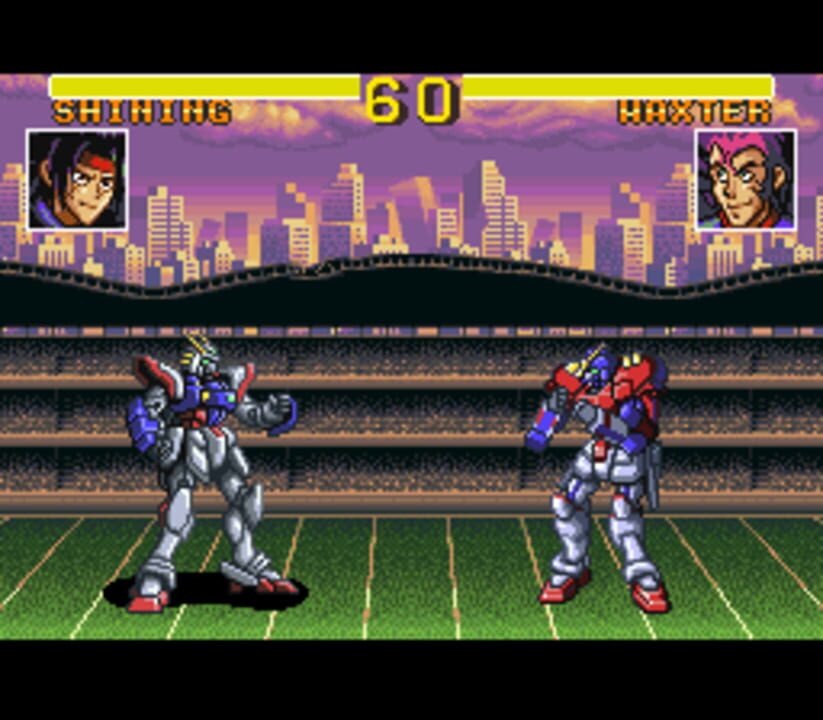
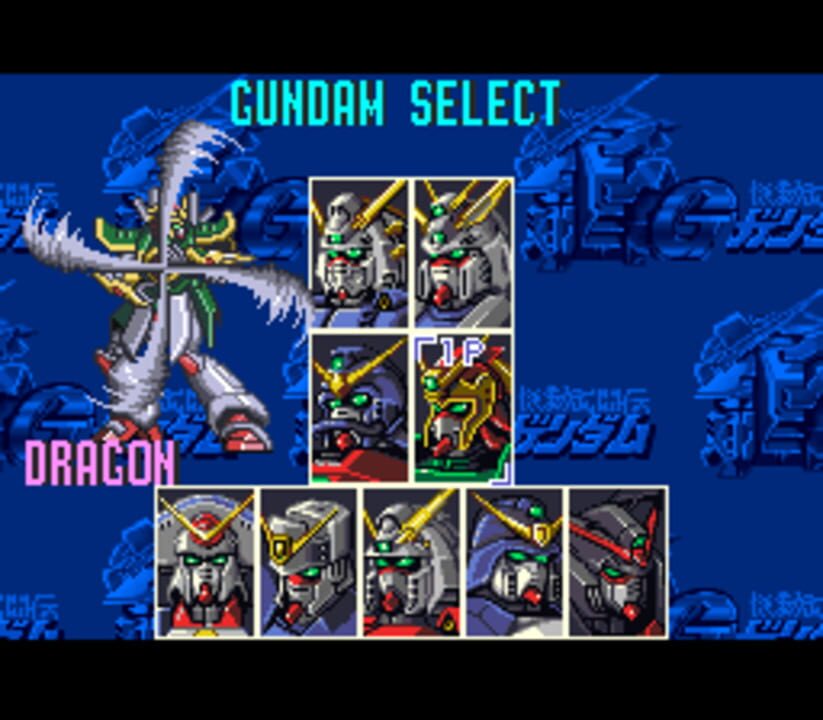
Similar in taste
Closest on the same fourteen dimensions, from everything scored on Curator Co. Other media included when they land close.
 Super Bomberman 199388% alikeBoth plot-driven, earnest, classical in form.
 Mekazoo 201687% alikeBoth plot-driven, earnest, unpretentious.
 Both plot-driven, resolved, unpretentious.
 Teenage Mutant Ninja Turtles 198986% alikeBoth plot-driven, unpretentious, classical in form.
 Donkey Kong Land III 199786% alikeBoth plot-driven, earnest, classical in form.
 Both plot-driven, unpretentious, earnest.
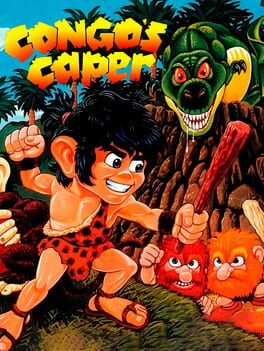 Congo's Caper 199285% alikeBoth plot-driven, unpretentious, earnest.
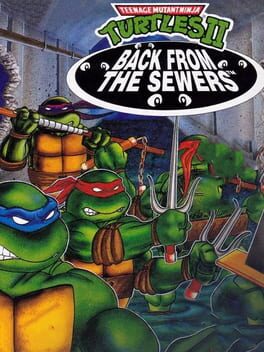 Both plot-driven, unpretentious, resolved.
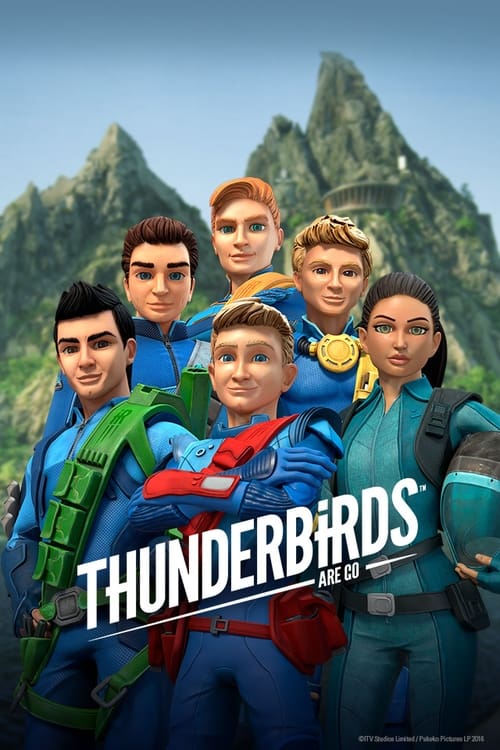 Thunderbirds Are Go! 201572% alikeSeries · Both earnest, classical in form, resolved.
 Teenage Mutant Ninja Turtles 200370% alikeSeries · Both resolved, unpretentious, classical in form.
Often played with
Similar games per IGDB. Opening one adds it to Curator Co.