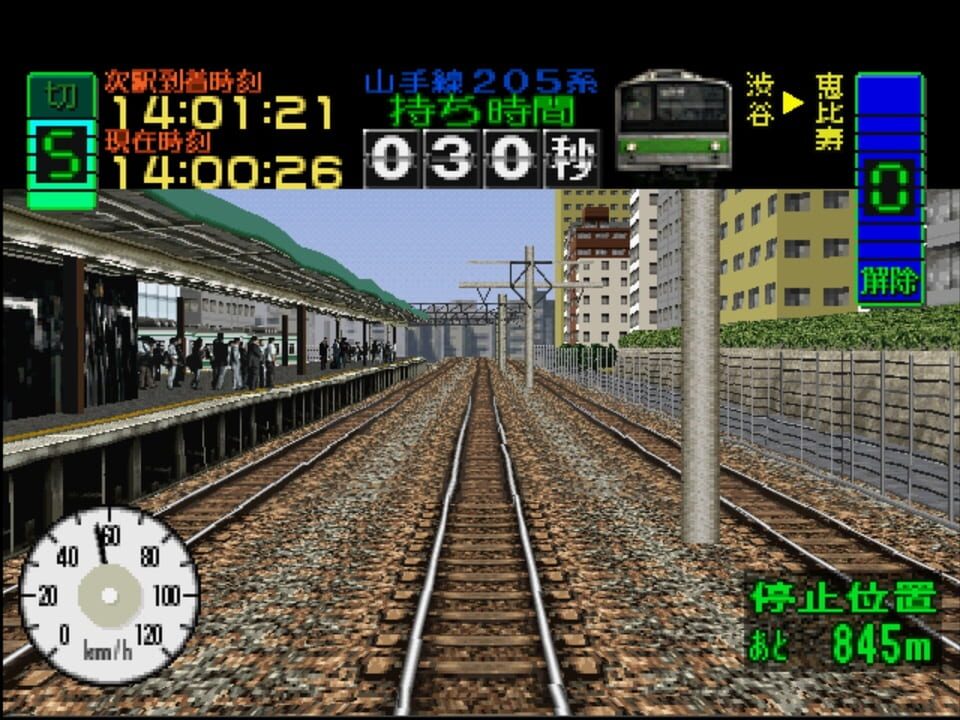
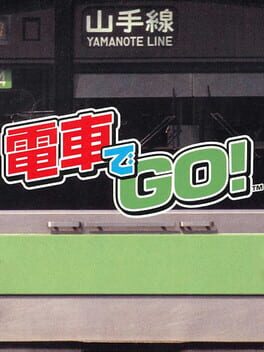
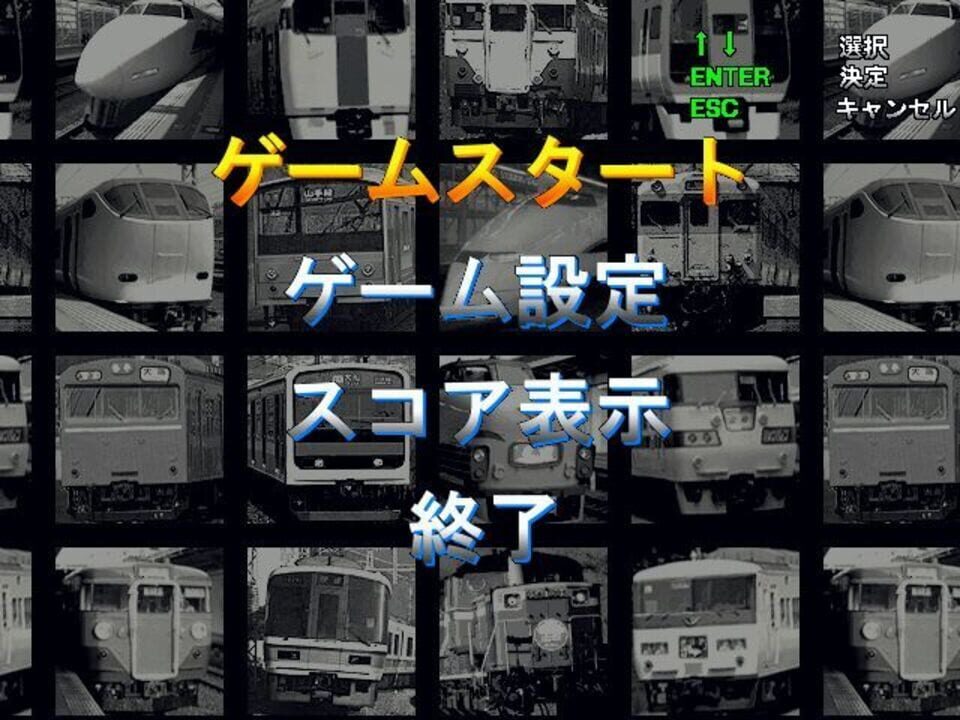
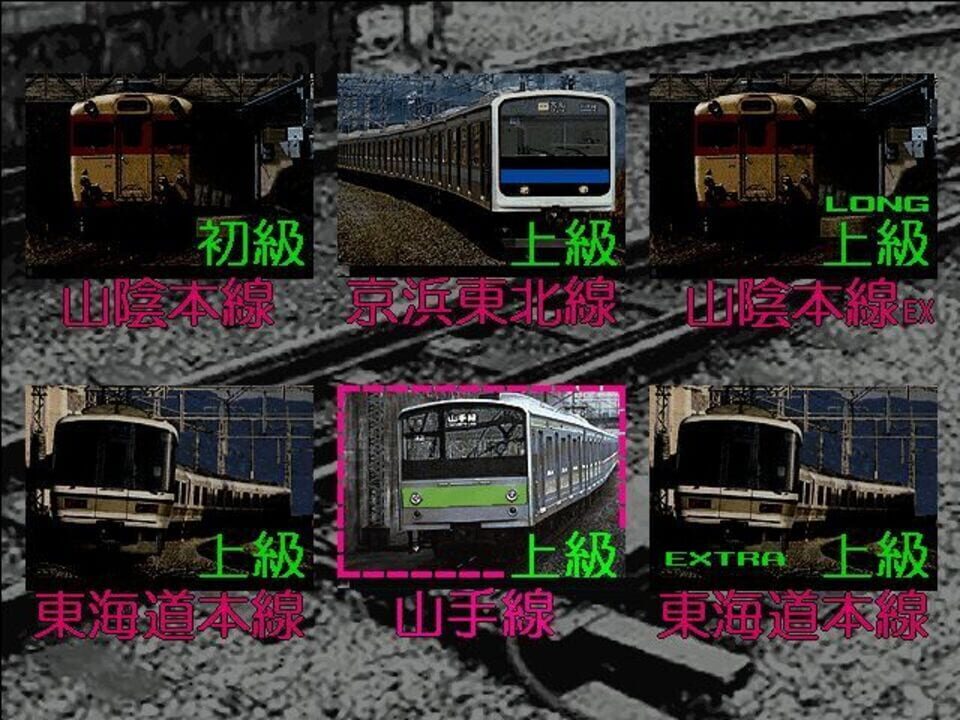
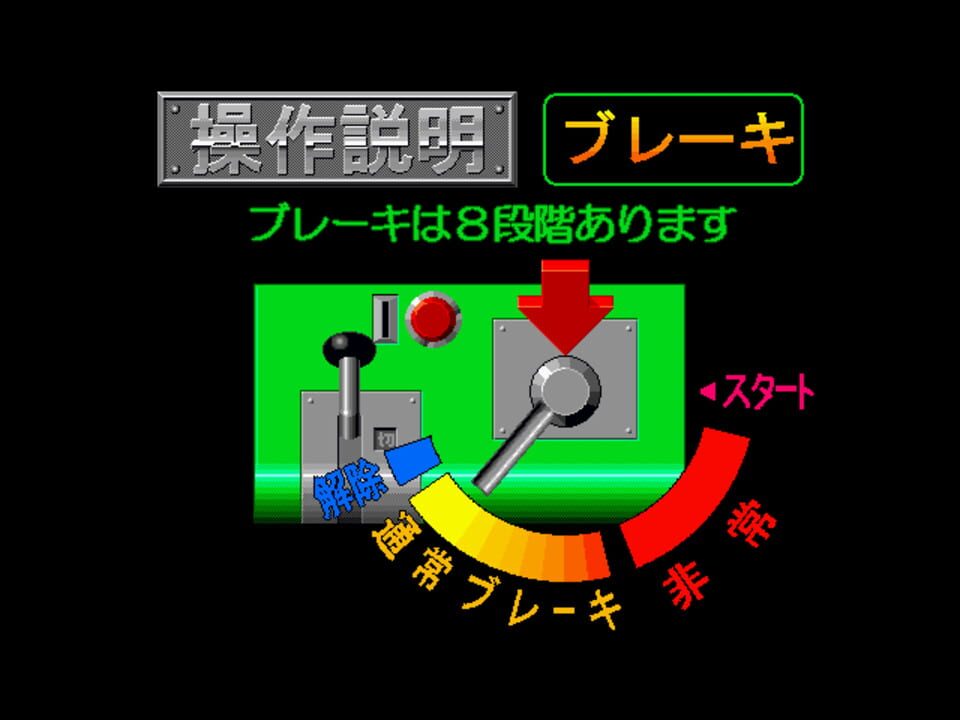
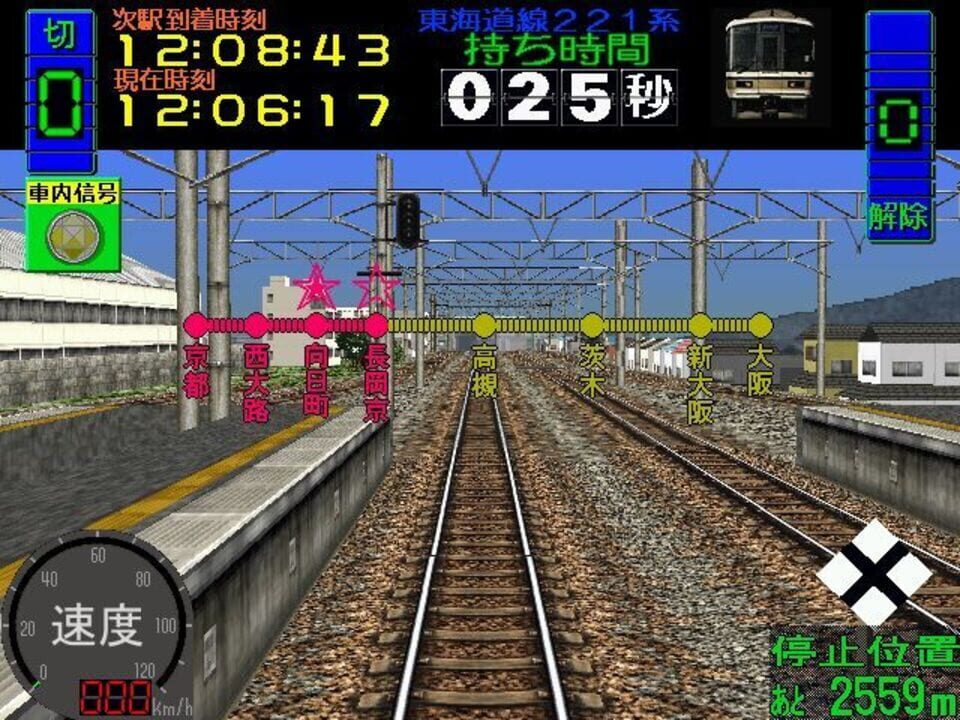
Densha de GO! is a 1997 train simulator arcade game developed and published by Taito in Japan. Players are tasked with driving a train, adhering to the schedule and obeying signals and speed restrictions. It features real-world train lines from Japan, including the Yamanote Line and Keihin-Tohoku Line. The game was ported to the PC, Sega Saturn, and PlayStation. The concept for Densha de Go! was inspired by designer Akira Saito's personal fascination with Japanese train lines and railroads. He wanted to create a game that allowed players to familiarize themselves with driving a train. The controls were his primary focus as he wanted them to be accurate and responsive, and to mimic the controls of a real train—his father worked for the Kyoto City Transportation Bureau Facilities Division, which made this easier to accomplish. Saito included real-world railroads and trains to appeal towards other railroad enthusiasts, thinking that it could also attract more "ordinary" players for its realistic, familiar theme. As arcades at the time were dominated primarily by racing and fighting games, he believed its unique concept could make it stand out. Densha de Go! is among Taito's most successful games, preceded only by Space Invaders. The PlayStation version sold over one million copies. The game was well-received by critics for its controls, attention to detail, and unique concept. Some felt that its home releases lacked enough content and had poor visuals. It was followed by a long series of sequels, spin-offs, and reimaginings, beginning with Densha de Go! 2 in 1999.
SimulatorNon-fictiontrain simulatorufojapan onlyArcade, PC (Microsoft Windows), PlayStation
Log it
Sign in to log this.
Where do you stand?
Three questions people argue about. Answer first, then see how your circle and the community split.
Has Densha de GO! aged badly?
Sign in to answerBe the first to answer.
Is it the best simulator game of its decade?
Sign in to answerBe the first to answer.
Would Densha de GO! hit harder if it came out today rather than in 1997?
Sign in to answerBe the first to answer.
Ask the title a question
Answered from the reviews and content notes on file, never made up. If nothing on file settles it, it says so.
Character
Earnest, plot-driven, grave and warm.
- earnestironic
- character-ledplot-driven
- gravecomic
- warmbleak
- cooloverwhelming
Who loves it, who doesn't
No profiled raters yet.
Reviews
No reviews yet.
About the game
- Platforms
- Arcade, PC (Microsoft Windows), PlayStation
- Developer
- Taito GM R&D Sect. #2
- Publisher
- Taito, UNBALANCE
- Released
- March 1, 1997
- Modes
- Single player
- Perspective
- First person
Screenshots
Pairings
Companions we picked from the closest works, and how to take them.
Similar in taste
Closest on the same fourteen dimensions, from everything scored on Curator Co. Other media included when they land close.
 Both earnest, plot-driven, grave.
 Both earnest, plot-driven, grave.
 Links LS 1999 199874% alikeBoth earnest, plot-driven, warm.
 Carcassonne 201773% alikeBoth earnest, plot-driven, grave.
 Kasparov Chessmate 200373% alikeBoth earnest, plot-driven, grave.
 Tecmo World Golf 199672% alikeBoth plot-driven, warm, earnest.
 Virtual Pool 199572% alikeBoth plot-driven, earnest, warm.
 Flight Unlimited III 199972% alikeBoth earnest, grave, plot-driven.
 Film · Both earnest, grave, warm; this one is more contemporary.
 Mary and The Witch's Flower 201754% alikeFilm · Both earnest, classical in form, grave.
Often played with
Similar games per IGDB. Opening one adds it to Curator Co.