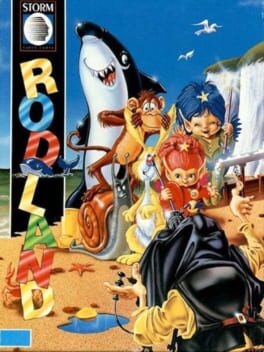
The player(s) control one or two fairies called Tam and Rit armed with a magic wand (rod). Following the concept of Taito's Bubble Bobble, the rod doesn't kill the monsters directly, but only leaves them immobilized, crying. To kill them, the rod can grasp them in a magic force-field and the player can smash them down over her head until they disappear and leave a power-up behind. Each level is only one small screen composed of monsters, platforms, ladders and, later, tunnels. Unlike other games of the genre, the players can never jump, but have to use ladders. They can conjure one custom ladder above or below them in order to go to the appropriate platform. There can be only one such 'custom' ladder; therefore if the fairy summons it again, it will disappear from its previous position in order to appear again next to the fairy. This can be beneficial for the player, if a monster is climbing that ladder to approach her. The fairies' quest is to rescue their mother, trapped in a tower. In the sequel (part of the original arcade machine) they must venture into a pyramid, to stop an evil demon that is building a mobile fortress. The spirit of their departed father "guides" them at a couple of points. The ending implies that the demon in the pyramid was somehow responsible for their father's death.
PlatformActionFantasysharkfairyhigh scorekidnappingwhaleArcade, Commodore C64/128/MAX, ZX Spectrum, Atari ST/STE, Amiga, Amstrad CPC
Log it
Sign in to log this.
Where do you stand?
Three questions people argue about. Answer first, then see how your circle and the community split.
Has Rod-Land aged badly?
Sign in to answerBe the first to answer.
Is Rod-Land overrated?
Sign in to answerBe the first to answer.
Is Rod-Land better than its reputation?
Sign in to answerBe the first to answer.
Ask the title a question
Answered from what people have written, never made up: a verdict, how much when it's a matter of degree, and the sentences that say so, quoted with their names. Reviews here first, then TMDB's reviews and the title's Wikipedia plot and reception. If nothing settles it, you can put it to the curators.
Character
Plot-driven, earnest, unpretentious and cool.
- character-ledplot-driven
- earnestironic
- unpretentiousprestige
- cooloverwhelming
- resolvedopen-ended
Who loves it, who doesn't
No profiled raters yet.
Reviews
No reviews yet.
About the game
- Platforms
- Arcade, Commodore C64/128/MAX, ZX Spectrum, Atari ST/STE, Amiga, Amstrad CPC
- Developer
- Sales Curve Interactive, Jaleco
- Publisher
- Storm, Jaleco
- Released
- December 31, 1990
- Modes
- Single player, Multiplayer, Co-operative
- Perspective
- Side view
IGDB rating 6.7/10 from 8 ratings.
Screenshots


Similar in taste
Closest on the same fourteen dimensions, from everything scored on Curator Co. Other media included when they land close.
 Daichikun Crisis: Do Natural 198982% alikeBoth plot-driven, earnest, unpretentious.
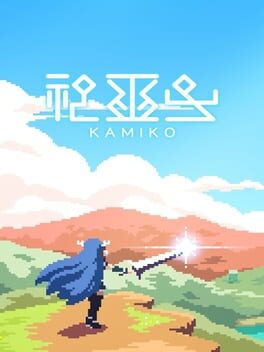 Kamiko 201779% alikeBoth plot-driven, earnest, unpretentious.
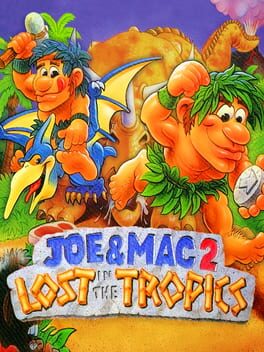 Both plot-driven, earnest, unpretentious.
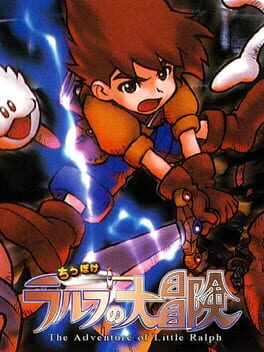 The Adventure of Little Ralph 199978% alikeBoth plot-driven, earnest, unpretentious.
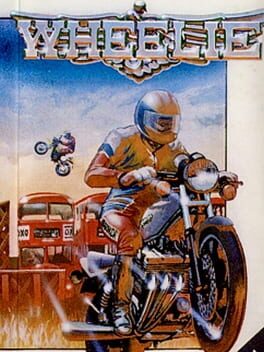 Wheelie 198378% alikeBoth plot-driven, unpretentious, earnest.
 Both plot-driven, earnest, unpretentious.
 Both plot-driven, earnest, unpretentious.
 Ziggurat 201477% alikeBoth plot-driven, unpretentious, earnest.
 Sherlock Holmes Faces Death 194365% alikeFilm · Both earnest, plot-driven, unpretentious.
 The House of Fear 194564% alikeFilm · Both earnest, unpretentious, plot-driven.
Often played with
Similar games per IGDB. Opening one adds it to Curator Co.